FSG Chernex: redesigning the site from Joomla to Astro

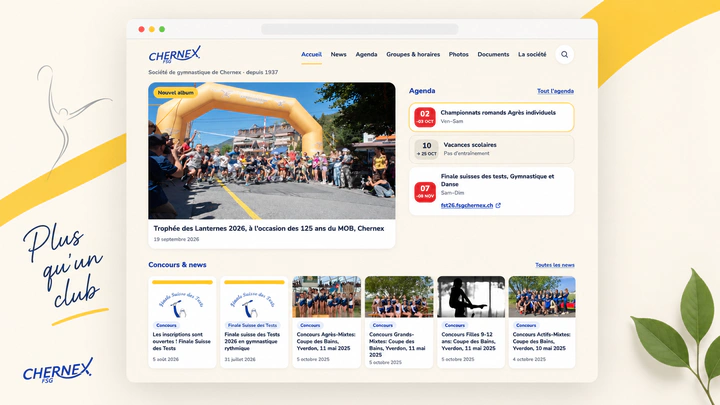
Client: FSG Chernex
Project: website redesign and migration
Date: October 3, 2026
I redesigned the public FSG Chernex website and moved it to a lighter technical foundation. Here’s how it changed: Joomla, then WordPress with Divi, and now an Astro interface that is lighter to serve. The new website is live.
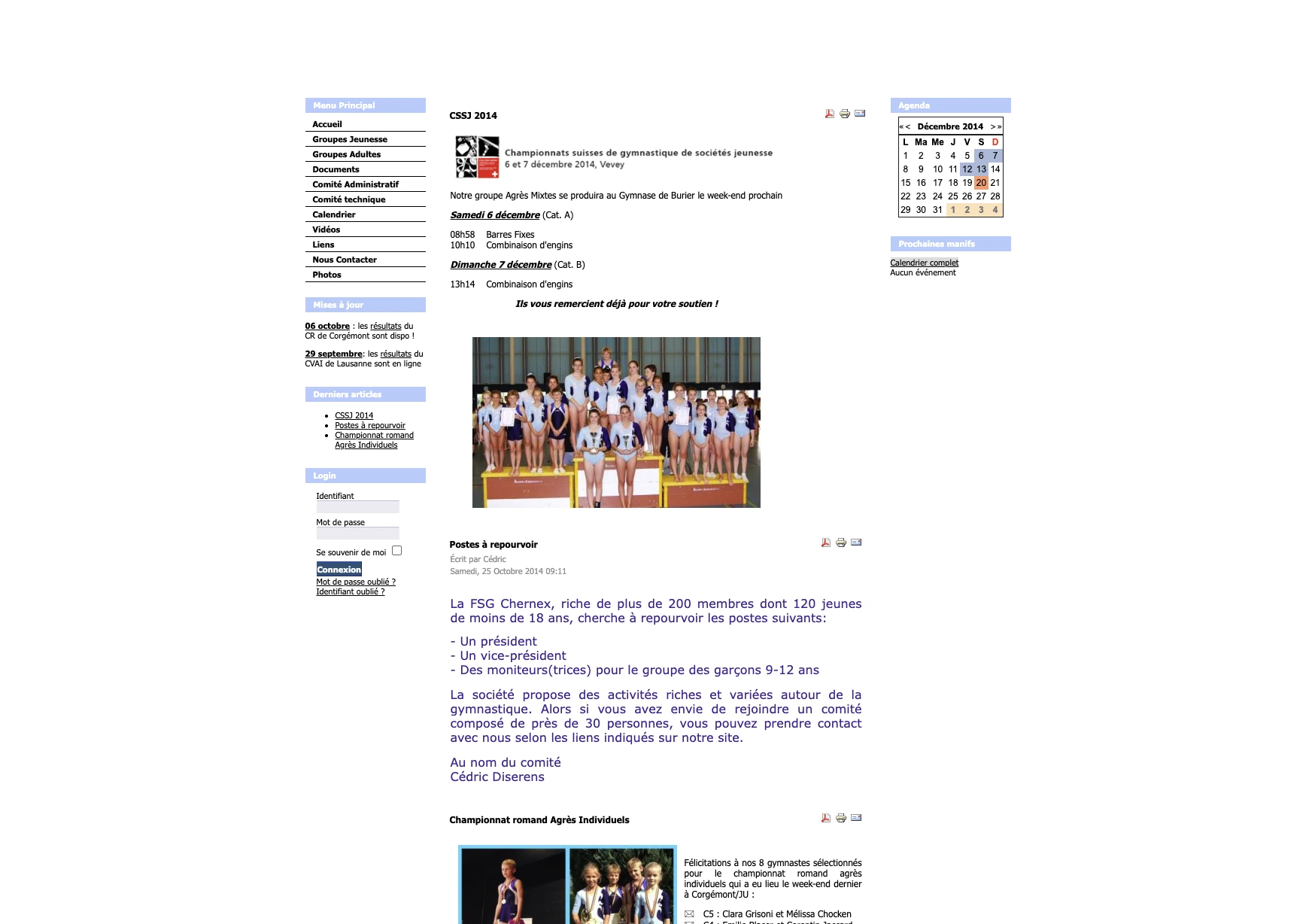
2014: a portal-style homepage
The Joomla version split the homepage into three columns: the main menu on the left, news in the middle and the calendar on the right. The information was there, but many elements had the same visual weight.
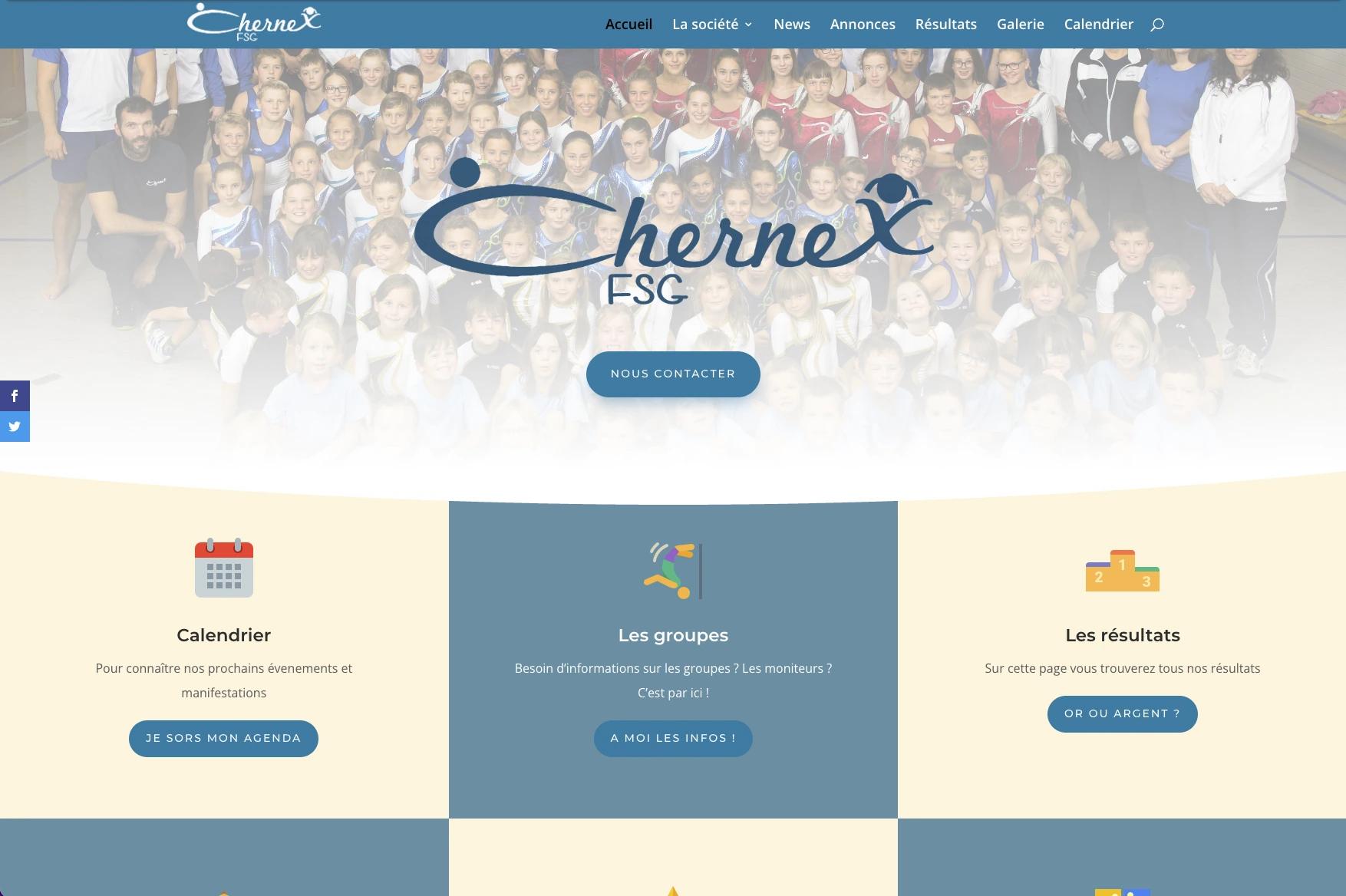
2025: Divi gave the club identity more room
With WordPress and Divi, the site used a large team photo, a centered logo and a horizontal navigation bar. Colored blocks separated the links to the calendar, groups and results. The club identity stood out more, though the homepage was still long to browse.
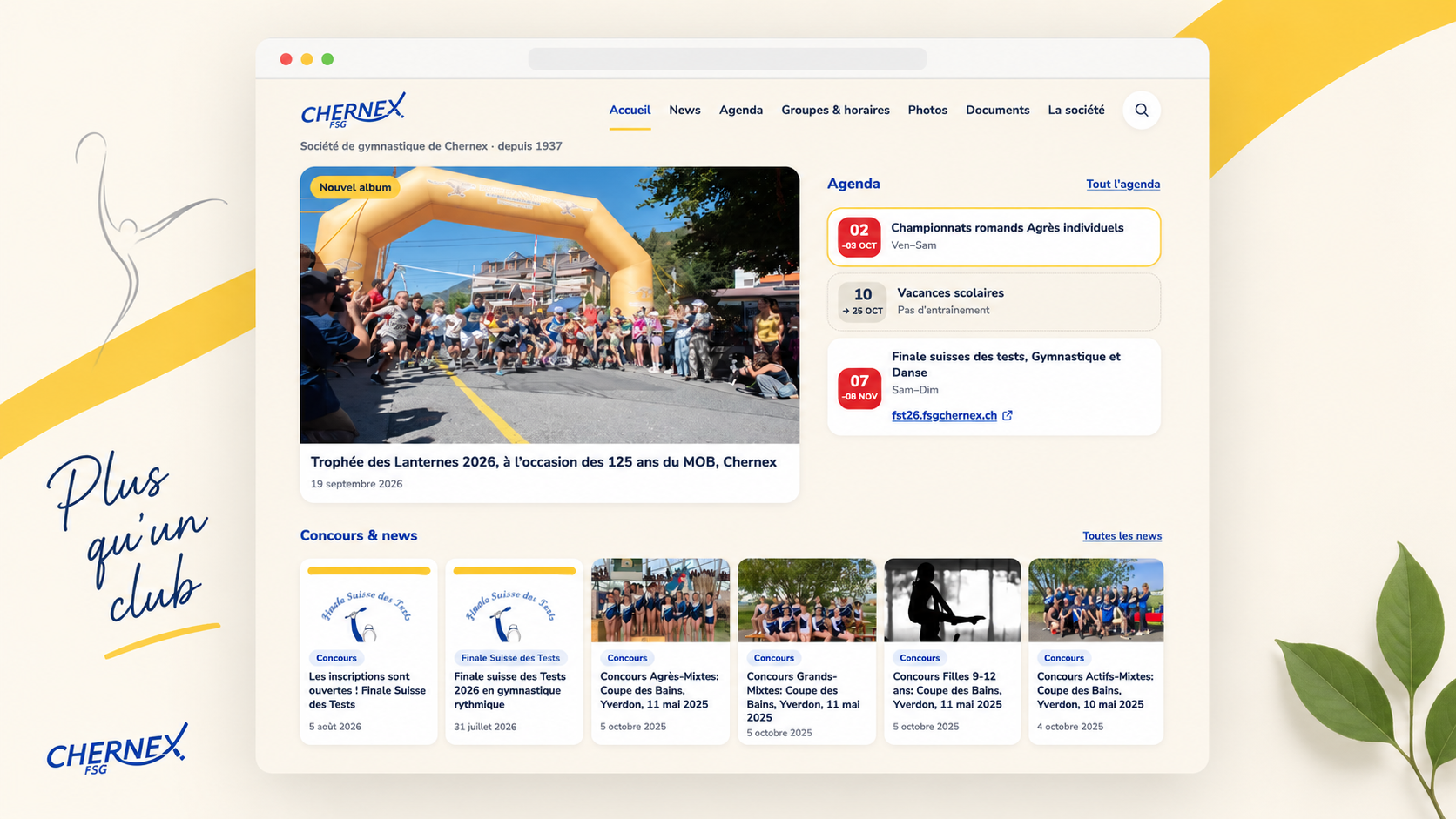
2026: a hierarchy built around what people need
I kept the important destinations and changed their order. The navigation links directly to news, the agenda, groups and documents. At the top of the page, the main story and upcoming events sit side by side. News cards and group schedules are easier to scan below.
The cream, navy and yellow palette brings in the club colors without making the page feel heavy. I also adjusted the layout so it stays readable on both phones and computers.
WordPress for publishing, Astro for serving
The club team keeps WordPress to edit content. When something is published, Astro generates the static pages for the public website. The browser receives files that are ready to display instead of a page assembled by the CMS on every visit. Images are also converted to lighter web formats.
A lighter website with a lower carbon impact
The Website Carbon badge on the site says the assessed page uses less carbon than 98% of websites tested. I took the badge screenshot on October 3, 2026.
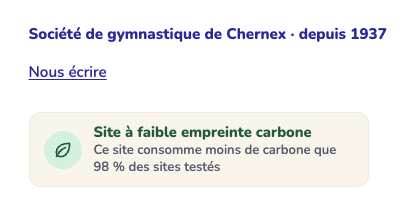
Static delivery and optimized images make each visit lighter: the browser downloads less data and the server has less work to do. The result is a faster website and lower-carbon browsing. The badge backs it up: the page ranks among the 2% lowest-carbon websites assessed.
Rating source: Website Carbon.